_edited.jpg)


Team Degon's take on the most viral toy of 2017...
- DEGON CUSTOMS
- Jun 1, 2020
- 3 min read

Well, the team never planned on making a toy, to begin with. The idea of a fidget spinner was brought to them by their college in the form of a Sem Based Project. The project was to fabricate a fidget spinner by any manufacturing techniques and it would be judged based on the spinning time and aesthetics. So by now, you might know that Team Degon never takes an easy route for a project and coincidently they had just finished building their second version metal foundry.

The basic principle of achieving longer spinning times in a fidget spinner is to have the centre of mass at the centre of the bearing. Also the more weight you have in the farthest point on the spinner, the longer it will tend to spin. Team Degon achieved this by going for a denser metal like brass for the outer rings and creating a custom aluminium alloy for a lighter centre core.


Brass Rings
The outer part of the spinner consists of two brass rings which were made from recycled brass gas burners. They used their foundry to melt the brass burners. After a few failed attempts because they were not able to achieve pouring temperatures, they successfully poured the molten brass into a steel glass which they used as a mould.


They then bored out the brass ingot to the thickness required on the lathe. The now brass ring was then put in a bench vice and using a metal axo blade was then divided into two equal rings for the outer portion of the spinner.


Custom Aluminium Lead Tin Alloy Core
The main core of the spinner had to be lightweight but strong enough to hold the bearing in place. The team's best option was aluminium but they wanted to try something different. They knew that the melting point of aluminium which is 660.3 °C was not the highest melting points in metals. So they had to find metals having a lower melting point than aluminium but have a much higher density and the best metal that fitted this description was Lead. But getting lead locally was troublesome. And then it sparked them lead soldering wire. Lead solders which have a composition of 60% (or 63%) tin and 40% (or 37%) lead was easily available. So they mixed lead solders into molten aluminium and then poured the complete mixture into a steel glass mould. They took the alloy ingot and machined it on a lathe to fit the outer brass rings.


Aesthetics of the Spinner
Now they had finished with all the basic structure of the spinner. How to make it look like a piece of art?
Corian is a composite material made from acrylic polymer and alumina trihydrate(ATH), a material derived from bauxite ore, which is widely used in manufacturing countertops. They decided to add Corian inserts to lock the bearing in place and they used carbon fibre vinyl to cover the Corian discs to give it a modern steampunk look.


Bearing and Pivot Points of the spinner
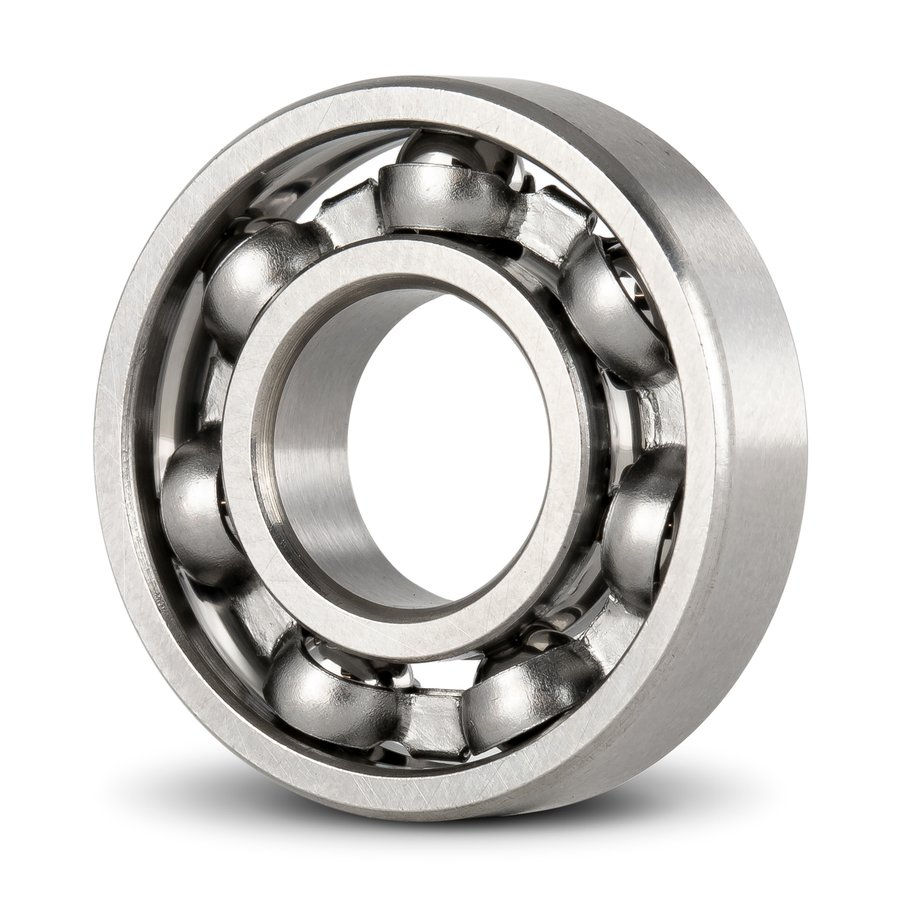
The team used a stainless steel R188 ball bearing for their spinner which they reused from a broken spinner. The bearing was completely degreased to reduce friction which will increase the spinning time. R188 is widely accepted in the fidget spinner community for longer spinning times.
The pivot points were 3D printed. This was the team's first experience in 3d printing. The filament material was Polylactic Acid. The Pivot points were then sanded down and spray painted.

Assembly and Finish
The outer brass rings and the alloy core were soldered together. They press fitted the bearing into the core. The complete body of spinner was then wet sanded up P800 grit for a smooth and shiny finish. And then they glued the Corian discs into place using 2 part epoxy. The pivot points were also fitted into the inner diameter of the bearing.


And the fabrication was complete. The team was thrilled to test out their new Metal Foundry and the college authorities were impressed by what the students had learnt through the project.
The steampunk spinner was able to spin for a time of 4 minutes 15 seconds after an initial torque was applied.
Proudly done by DEGON CUSTOMS.....
To see more about this project, check out our Instagram Feed.


Comments